
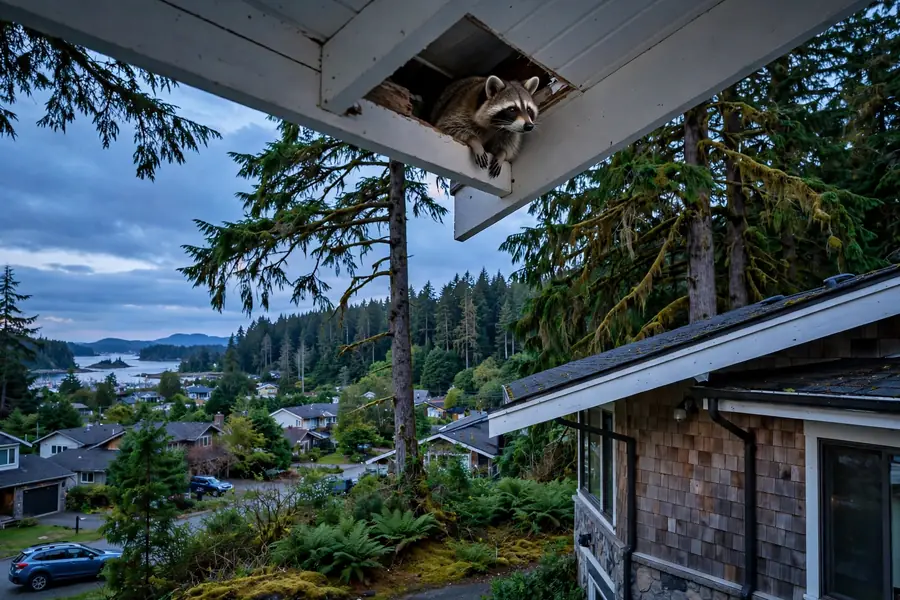
An exterminator treats insects and small rodents with sprays, baits and traps, while wildlife removal deals with larger animals such as raccoons, squirrels, bats and birds by safely getting them out and sealing the gaps they used to get in. That one sentence clears up most of the confusion. Hiring the wrong specialist can cost you money, leave your home damaged and, in some cases, put an animal at risk or break the rules that protect it.
If you live on Vancouver Island, you have probably heard scratching in a wall or ceiling and wondered who to call. This guide explains the Exterminator vs Wildlife Removal question in plain language so you can choose the right help the first time.
The Short Answer
Exterminator: Handles ants, wasps, cockroaches, bed bugs, spiders, fleas, mice and rats. The goal is to eliminate the infestation.
Wildlife removal: Handles raccoons, squirrels, bats, birds and skunks. The goal is to resolve the conflict, repair the damage and stop the animal from returning.
The real difference: Extermination reduces a pest population. Wildlife work fixes a building problem, because an animal is usually inside only because your home let it in.
What an Exterminator Actually Does
Exterminators are trained in pest biology and treatment products. A typical visit starts with an inspection to identify the pest and the conditions feeding it, such as moisture, food residue or gaps around pipes. Then comes a treatment plan using targeted sprays, gels, bait stations, dusts or traps. Return visits confirm the problem is gone.
This approach works very well for small pests that breed quickly. A wasp nest under the eaves or a carpenter ant colony in damp wood calls for exactly this kind of precision. It falls short with larger animals. Killing a squirrel in a roof cavity does not repair the hole it chewed, and another animal can easily move into the same space. A dead animal inside a wall can also create odour and insect problems of its own.
What Wildlife Removal Involves
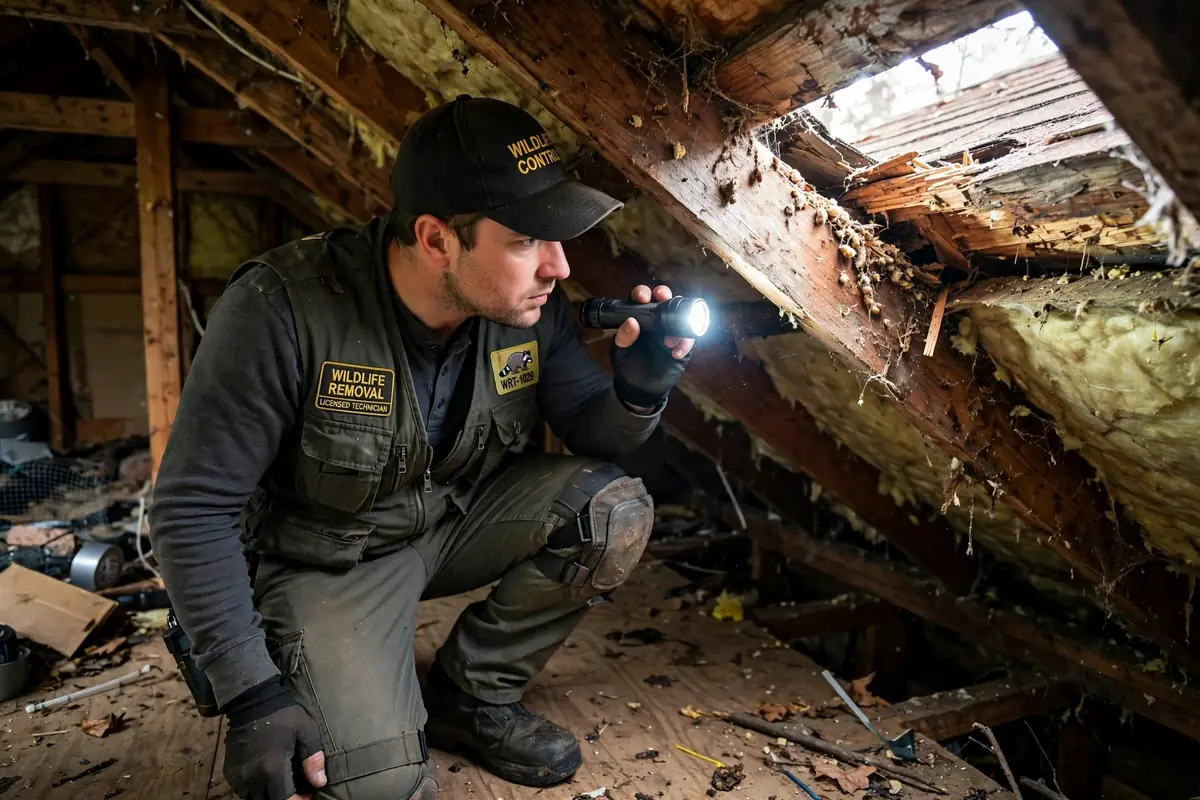
A good wildlife technician works more like a building detective than a pest killer. The process usually looks like this:
- Inspection: They check the roofline, soffits, vents, chimney, crawl space and decks to find entry points and identify the species.
- Timing check: They look for dependent young. Spring and early summer are common nesting seasons, and separating a mother from her babies is harmful and often leads to repeat noise and odour problems.
- Removal that fits the species: The method depends on the animal and the situation. A door that lets the animal leave but not return can work in some cases, but it is not suitable when babies are present. In those cases, the right approach may be to wait or to reunite the family safely.
- Cleanup: Droppings, insulation soiled by urine and nesting material are removed, because they carry odour, parasites and health risks.
- Repair and sealing: Damaged fascia, vents and gaps are repaired with materials animals cannot chew through.
- Prevention advice: You get practical steps to make the property less attractive next season.
Look for wildlife and rodent control companies accredited through the BC SPCA’s AnimalKind program, which assesses companies against animal welfare standards. WildSafeBC is another useful source of guidance.
A Safety Note About Bats and Birds
Bats and birds need extra care. Bats are protected in British Columbia, so they should never be poisoned, and an entry point should never be sealed until a professional has confirmed that no bats are trapped inside. Bat exclusion should be timed carefully to avoid trapping flightless young inside the building, especially during maternity season. Active bird nests also come with rules, so the species and the timing should be checked before anything is disturbed. If you suspect either one, call a qualified wildlife specialist before you try to fix anything yourself.
Check the Rules Before You Act
Wildlife rules in British Columbia vary by species and situation. Before trapping, relocating or excluding an animal, confirm the applicable provincial requirements and any local bylaws. The BC SPCA also advises against trapping animals yourself, because they can be injured or separated from their young.
Poison deserves caution too. Rodent baits can harm owls, hawks and pets that eat poisoned prey. Ask any company which products they use, where they place them and how they keep other animals, which were never the target, safe.
Which Problem Needs Which Professional?
When it comes to Exterminator vs Wildlife Removal, the animal in your home makes the decision for you.
Call an exterminator for:
Call a wildlife specialist for:
The Gray Area: Rats and Mice
Rats and mice sit between the two trades, and both can legitimately help. If rodents are in a kitchen, garage or storage room, a rat and mice exterminator is usually the right first call. If they are entering through the roofline, vents or foundation, you need someone who also does exclusion work. Ask whether the company seals entry points or only sets traps. Without sealing, the problem tends to come back.
Warning Signs You Called the Wrong Pro
How to Choose the Right Company
Wildlife and rodent control is not regulated in the same way in every part of the industry, so do your own checking. Ask these questions before you book:
Clear answers, photos of the problem areas and a written plan are signs of a professional you can trust.
Simple Ways to Prevent Repeat Visits
Trim branches that touch the roof, secure garbage and compost bins, bring pet food indoors and keep bird feeders from overflowing. Cap the chimney, screen the vents and repair loose fascia or soffit boards promptly. Inside, store dry food in sealed containers and fix leaks that create damp spots for insects.
Local conditions matter here. In Nanaimo and across Vancouver Island, many homes sit close to mature trees and forested lots, and the damp coastal climate can soften wood trim over time. Overhanging branches give squirrels and rodents an easy path to the roofline, and weathered soffits and fascia make entry easier. A quick roofline check before fall and again in early spring can catch small gaps before animals find them. For more guidance, the BC SPCA, WildSafeBC and the Government of British Columbia all publish helpful wildlife resources.
Frequently Asked Questions
Is an exterminator the same as a pest control technician?
In everyday use, yes. Both terms generally refer to professionals who manage insect and rodent infestations, although the exact services offered vary by company.
Can an exterminator remove a raccoon or squirrel?
Sometimes, but it is not always their core skill. Ask whether they perform species identification, exclusion and repairs, or whether they refer wildlife jobs to a specialist.
Is it safe to trap animals myself?
It is risky. Traps can injure animals, orphan babies and create legal problems. A qualified professional understands the rules and the safest methods for each species. If you are weighing the do it yourself route, our guide on DIY vs professional pest control explains where each option makes sense.
Which one costs more?
It depends on the job. Wildlife work often includes repairs and cleanup, which adds cost, but it addresses the cause and helps prevent a repeat problem.
Final Thoughts
Understanding Exterminator vs Wildlife Removal comes down to one question: is the problem a pest infestation to control, or a wild animal that needs to be removed safely and prevented from returning? Insects and kitchen rodents belong with an exterminator. Larger animals that have found their way into your roof, walls or crawl space belong with a wildlife specialist. Choose the right expert, ask for a written plan and fix the entry points, and you will save yourself repeat visits and repair bills.